
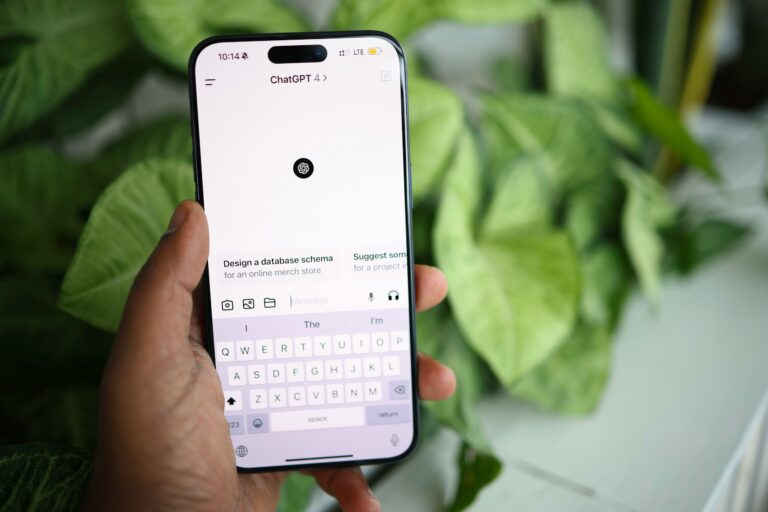
Imagine asking ChatGPT to find you a hotel in Edinburgh for the second weekend in November, under £150 a night and within walking distance of the castle. Instead of a list of links, it pulls live prices and availability straight from Booking.com and shows them to you right there in the chat. You pick the one you like and you are a click away from booking.
Now imagine a car buyer asking for every automatic SUV under £20,000 within 30 miles of their home, and getting a shortlist from a dealer’s real, up-to-date stock. Or a shopper browsing a retailer’s whole range, checking sizes and colours, without ever opening the website.
This is not a vision of the future. It is already happening, and the technology behind it is called MCP. In this guide we explain, in plain English, what MCP is, why it matters for businesses like yours and what it takes to create an MCP of your own.
What is MCP?
MCP stands for Model Context Protocol. It is an open standard, first released by Anthropic (the company behind Claude) in November 2024, that gives AI assistants a common way to connect to outside tools and information. OpenAI adopted it in 2025, and it now powers the apps you can use inside ChatGPT, as well as the connectors in Claude and a growing number of other AI tools.
The simplest way to think about it is this. Your website is built for people to visit. An MCP is built for AI assistants to visit. It acts as a doorway that lets an assistant like ChatGPT look up your products, prices, stock or services, and in some cases take an action such as starting a booking, all while your customer stays in the conversation.
A universal plug for AI
You may hear MCP described as “USB-C for AI”. Before USB-C, every device seemed to need its own charger. Before MCP, every AI tool needed its own custom connection to every system. MCP gives everyone the same plug, so a single connection to your business can work across several AI assistants rather than just one.
Why MCP matters for your business
More and more people now start their research by asking an AI assistant rather than typing into a search engine. When they do, the assistant can only work with the information it can reach. Without an MCP, it relies on whatever it can find about you on the web, which may be out of date, incomplete or, worse, about your competitors instead.
Be there when the question is asked. An MCP means your business can appear at the exact moment someone asks an AI assistant for what you sell. It sits naturally alongside your SEO and AI search visibility work, giving assistants a direct source of truth rather than leaving them to piece together an answer.
Accurate answers from your own data. Because the AI is reading your live information, customers see your real prices, your real availability and your real product details. No guesswork, no outdated figures.
A shorter path to purchase. Every extra click is a chance for a customer to drop off. Letting people search, compare and shortlist without leaving the chat removes steps between interest and enquiry.
A head start on your competitors. MCP is still new, and most businesses have not yet built one. Brands such as Booking.com, Expedia and Zillow were among the first to launch apps inside ChatGPT, and the businesses that follow early are the ones customers will get used to finding there.
What an MCP could look like for your business
An MCP is not only for global brands. Any business with information customers want to search, compare or act on can benefit. A few examples:
Hotels and holiday lets: guests check availability and prices for their dates and see room options without visiting your site.
Car dealerships: buyers search your stock by budget, fuel type, mileage or location and get a shortlist of cars you actually have on the forecourt.
Ecommerce retailers: shoppers browse your full catalogue, filter by size, colour or price, and check what is in stock.
Estate agents: house hunters search current listings by area, price and number of bedrooms.
Service businesses: potential clients check which services you offer, see pricing guides or request a quote or appointment.
What does MCP implementation involve?
MCP implementation sounds technical, and behind the scenes it is. From your side as a business owner, though, the process is straightforward. Here is how we approach MCP creation, step by step.
1. Decide what you want AI to be able to do
Start with your customers, not the technology. What questions do they ask most often? What do they need to know before they buy or enquire? The answers shape what your MCP should offer, whether that is searching stock, checking prices, confirming availability or booking a call.
2. Get your data in order
An MCP is only as good as the information behind it. Your product feed, stock system, booking platform or listings database needs to be accurate and kept up to date. If your data is scattered or inconsistent, this is the time to tidy it up.
3. Build the MCP
This is where an MCP developer comes in. They connect the MCP to your existing systems and define the specific things an AI assistant is allowed to do, such as “search stock” or “check price for these dates”. Each of these is described clearly, so the AI knows when and how to use it.
4. Set the rules and keep it secure
You stay in control of what the AI can see and do. Most businesses start with read-only access, meaning the AI can look things up but cannot change anything. Customer data, pricing rules and anything confidential stay protected, and access is set up with UK GDPR in mind.
5. Test, launch and get listed
Before going live, the MCP is tested with the kinds of questions real customers ask, to make sure the answers are accurate and helpful. Once it is ready, it can be submitted for listing in places such as the ChatGPT app directory, so people can find and use it.
6. Measure and improve
After launch, we look at how people are using it: which questions come up, which products get viewed and how many conversations turn into enquiries or sales. That insight feeds back into improving both the MCP and your wider marketing.
Do you need an MCP agency, or can you build it yourself?
If you have an experienced development team with time to spare, building an MCP in-house is possible. The standard is open and there are free tools to help. For most businesses, though, the challenge is not just the code. It is knowing what to build, how to make it genuinely useful to customers and how to connect it to your marketing goals.
If you are looking for an MCP builder, look for a partner who understands both sides: the technical build and the commercial reasons behind it. They should be able to explain things in plain English, take security seriously, and support you after launch rather than handing over a finished product and walking away.
How Magnify Digital can help
As a digital marketing agency, we see MCP as the next step in making sure customers can find you wherever they search. We offer MCP creation help from start to finish: working out what your customers need, preparing your data, building and testing your MCP, and measuring how it performs once it is live.
Whether you run a hotel, a dealership, an online shop or a service business, our team can act as your MCP development agency and give you a clear, honest view of what an MCP could do for you. If you would like to explore it, speak to our team and we will talk you through the options.
Frequently asked questions
An MCP is a way of connecting your business information to AI assistants like ChatGPT and Claude. It lets those assistants look up your products, prices or availability and show them to customers directly in the conversation.
Yes. An MCP works alongside your website rather than replacing it. Your website remains the home of your brand, and many customers will still visit it. The MCP simply gives you another way to be found.
MCP is supported by ChatGPT, Claude and Microsoft Copilot, among others. Because it is an open standard, one MCP can often be used across several assistants.
It can be, when it is set up properly. You decide exactly what information the AI can access and what actions it can take, and sensitive data can be kept out of reach entirely.
It depends on what you want it to do and how your data is currently organised. A simple MCP that lets AI search a product catalogue is far quicker to build than one that handles bookings or connects to several systems. We will give you a clear timeline once we understand your requirements.